Spice Spice Baby!: How HOT, BURN, INFERNO and DIABLO Change the Slot Mechanics
Released by Play’n GO on 28 April 2026, Spice Spice Baby! is built around a simple idea: the action appears to grow hotter as the session moves from HOT through BURN and INFERNO to DIABLO. Those names are important to the game’s identity, but they should not be mistaken for four separately documented mathematical modes. Play’n GO presents them as progressive spice levels that create a sense of escalation, while the rules themselves are driven by Wild collection, Scatter triggers, sticky prize respins and multiplier wheels. Understanding that distinction makes the slot easier to read because the visible heat theme can then be connected to the features that actually affect a spin.
How the Heat Scale Works in the Base Game
Spice Spice Baby! uses a five-reel, three-row layout with 243 ways to form wins. Published game information lists medium volatility and a maximum win of 6,000 times the stake, so the design sits between very calm low-variance games and more aggressive high-volatility releases. The base game is deliberately straightforward: regular symbols make combinations across the reels, while Wild and Scatter symbols control the routes into the main bonus mechanics. This keeps the basic spin easy to follow and leaves most of the extra complexity for the two respin features.
The HOT, BURN, INFERNO and DIABLO labels are best read as a visual progression rather than four buttons that switch the paytable or reel set. Play’n GO describes them as progressive spice levels that give the game its rhythm and character. The official rules page does not assign a separate RTP, volatility value or unique reel configuration to each named level. In practical terms, the scale tells the player that the presentation is becoming more intense, while the underlying feature triggers still depend on the symbols that land.
This is an important distinction because it prevents the heat meter from being treated as a predictor. A move towards a hotter label does not mean that a large win is due, nor does it guarantee that the next spin will enter a bonus. The mechanical changes that matter are visible elsewhere: Wilds feed the Chili Bowl, collected Wilds may lead to the Wild Fire Bonus, and three or more Scatters can start Burn, Baby, Earn! The theme makes these events feel connected, but each feature still follows its stated trigger rules.
From HOT to BURN: Wild Collection and Feature Triggers
The Wild symbol has two jobs in the base game. It can substitute for every regular symbol except the Scatter, and each Wild that lands is also collected into the Chili Bowl. This collector is always relevant because it gives ordinary base-game spins a second layer of purpose. A Wild may help complete a winning combination immediately, while at the same time contributing to the separate Wild Fire route. That is the clearest mechanical meaning behind the early stage of the heat theme: the game is gathering the ingredients needed for a possible feature rather than simply changing its visual temperature.
The Wild Fire Bonus can be activated when collected Wilds trigger it. Play’n GO specifies one notable restriction: the feature does not trigger on a spin where a Wild and a Scatter land together. Once Wild Fire starts, the normal reel symbols are replaced by prize symbols and the game changes to a sticky respin format. New prize symbols remain in position, and each new landing refreshes the respin sequence. This is the first major shift away from ordinary 243-ways play because the objective becomes filling available positions with prize values rather than forming standard symbol combinations.
Burn, Baby, Earn! follows a different route. It starts when three, four or five Scatters land, so the player does not need the Chili Bowl to activate this feature. The number of Scatters matters because more Scatters unlock more Multiplier Wheels before the sticky respins begin. In other words, the game uses two independent paths into its hotter bonus play: collected Wilds can lead to Wild Fire, while Scatters lead to Burn, Baby, Earn! This separation is more important mechanically than the decorative shift from HOT to BURN itself.
INFERNO: Where Sticky Respins Become the Main Mechanic
Once either main bonus enters its respin phase, the usual base-game logic largely disappears. Prize symbols can occupy positions on the 5×3 grid, and landed prizes stay fixed while the remaining empty positions continue to respin. Each new prize symbol resets the remaining respins, extending the round. This creates a clear change in pace: the base game asks for combinations across adjacent reels, while the bonus asks for additional prize symbols before the respin counter expires. The visual idea of INFERNO fits this stage because several mechanics are now active at the same time, yet the rules remain easy to understand.
Published rule summaries for Spice Spice Baby! state that these bonus rounds begin with three respins. A new prize returns the counter to three, so one landing can prolong the sequence even after two unsuccessful respins. The process continues until no respins remain or the available grid positions are filled. There is no requirement to remember a complicated sequence of choices: the feature is automatic once triggered, and the key information is simply which positions have already been locked and how many empty spaces remain.
Wild Fire and Burn, Baby, Earn! use similar sticky-prize logic but do not offer exactly the same bonus conditions. Play’n GO states that Wild Fire can award one Bonus Prize, whereas Burn, Baby, Earn! can award up to two. Filling every position awards the Grand Prize in either feature. That shared full-grid target makes the two rounds visually similar, but their entry conditions and multiplier treatment differ. For a player comparing the features, the practical question is not which heat label is currently on screen, but which trigger started the round and which modifiers are active inside it.
How the Multiplier Wheels Increase the Intensity
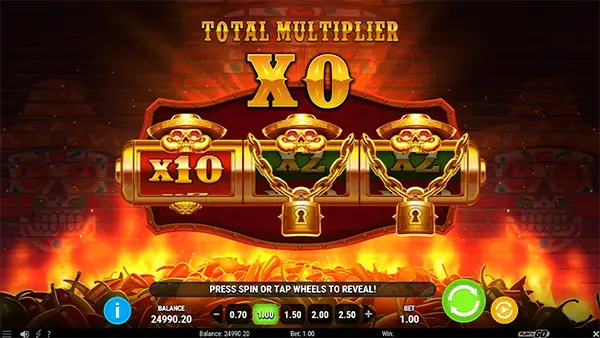
The Multiplier Wheels belong specifically to Burn, Baby, Earn! and are tied to the number of triggering Scatters. Three Scatters unlock one wheel, four Scatters unlock two, and five Scatters unlock three. This gives the Scatter count a direct mechanical consequence before the respins begin. A five-Scatter trigger therefore does more than start the same feature with a stronger animation: it provides an additional wheel compared with four Scatters and two additional wheels compared with three.
The wheel results are added together and the combined multiplier is then applied to the Cash Prizes collected during the feature. Published game data lists a maximum combined multiplier of x30. This approach is different from multiplying several wheel values by one another, which would create much larger numbers. Adding the results keeps the mechanic readable: the player can see the total modifier first and then understand how it changes the value of collected Cash Prizes at the end of the feature.
This is where the INFERNO idea has the strongest practical connection to increased feature intensity. The respin system itself remains familiar, but Burn, Baby, Earn! can place a multiplier layer on top of the collected cash values. More Scatters at the trigger stage can mean more wheels, while each new prize during the feature can keep the respins alive. Even so, none of these conditions makes a particular prize certain. The extra wheels change the available multiplier structure; they do not turn the round into a guaranteed high-value result.
DIABLO: Prize Levels, Maximum Win and the Limits of the Heat Theme
The upper end of the feature design is represented by fixed Bonus Prizes and the full-grid Grand Prize. Published 2026 game information lists Mini at 20x the total bet, Minor at 50x, Major at 500x and Grand at 5,000x. The Grand is awarded when all 15 positions are filled during the respin feature. These values help explain why DIABLO works as the final visual stage of the heat concept: it suggests the highest level of feature pressure, but the actual award still comes from specific prize symbols and the completed grid rather than from reaching a named heat label by itself.
The game’s published maximum win is 6,000x the stake. RTP information also requires some care because Spice Spice Baby! is available in several configurations. Published data lists versions including 96.18%, 94.16%, 91.15%, 87.15% and 84.15%, which means the figure shown at one online casino may differ from the figure shown elsewhere. A player checking the game in 2026 should therefore use the RTP displayed in the local game information rather than assuming that the highest published setting is always active.
Nothing in Play’n GO’s public description says that HOT, BURN, INFERNO or DIABLO independently changes the RTP or rewrites the probability model. The developer describes the four names as progressive spice levels that frame the rising intensity, while the separate rules explain Wilds, Scatters, respins, prize symbols and multiplier wheels. The most defensible reading is therefore that the heat scale is a presentation layer wrapped around the feature flow. It helps communicate escalation, but the concrete mechanical changes come from entering Wild Fire or Burn, Baby, Earn! and from the conditions inside those rounds.
What the Four Heat Levels Really Mean for a Player
HOT can be understood as the base state where regular 243-ways play, Wild substitutions and Chili Bowl collection establish the rhythm. BURN reflects the point where feature triggers become more prominent, especially through Wild Fire or a Scatter activation. INFERNO fits the sticky respin stage, when landed prize symbols remain locked and new prizes can reset the respin counter. DIABLO represents the upper end of the feature design, where multiplier-enhanced Cash Prizes, Bonus Prizes and the full-grid Grand become the most relevant outcomes. This is a practical way to read the theme, not a claim that Play’n GO has published four separate mathematical modes under those names.
The distinction matters for bankroll decisions as well. A hotter visual state should not be used as a reason to increase a stake or continue playing beyond a planned limit. Wild collection can lead to Wild Fire, but the trigger is not presented as a guaranteed reward for reaching a visible milestone. Scatter-based entry into Burn, Baby, Earn! also depends on the symbols that land. The heat presentation can make a session feel as if it is building towards a peak, yet the rules do not provide evidence that a previous sequence of spins makes a large result more likely on the next one.
Spice Spice Baby! is therefore easiest to understand when theme and mechanics are separated. The four heat levels give the slot a clear sense of progression, while the real rule changes come from two bonus routes: collected Wilds feeding Wild Fire and three or more Scatters opening Burn, Baby, Earn! Sticky prize respins then replace ordinary combinations, and multiplier wheels can raise collected Cash Prizes in the Scatter-triggered feature. For players, that is the useful reading of HOT, BURN, INFERNO and DIABLO in 2026: they organise the feeling of escalation, while the stated symbols and bonus rules determine what actually happens.